
What are you waiting for?
Hundreds of passengers trust us every week for stress-free travel. Fixed fares, on-time arrivals, professional service — always.
The Train Was Fine. Until It Wasn’t.
The Netherlands has one of the best rail networks in Europe. Fast, frequent, and reasonably comfortable — until your connecting service is cancelled, your luggage is too heavy for the stairs at a small station, or your destination simply isn’t served well by public transport.
Or perhaps the issue is simpler: you have a deadline, you need to arrive fresh, and the idea of navigating platforms with bags and a tight schedule sounds like an entirely unnecessary source of friction.
Private intercity transfers exist for exactly these situations. And once you’ve done a long journey by private car with a professional driver, the appeal of the alternatives starts to look quite different.
What City-to-City Transfer Actually Means
This isn’t a taxi that happens to go further. A proper intercity private transfer is a door-to-door service — from your specific address to your specific destination, with no changes, no platforms, no transfers, and no uncertainty about timing.
The price is fixed before you leave. The vehicle is matched to your party size and luggage. And the driver handles the navigation, the traffic management, and the routing — leaving you to use the journey time however you choose.
For distances between 50 and 300+ kilometres across the country, this is often the most practical option on the table — particularly when the journey involves luggage, time sensitivity, early or late departures, or more than one passenger.
The Routes Where Private Transfer Wins
It is a compact country, but certain city combinations are consistently underserved by direct public transport — or served by routes that involve multiple changes and significant travel time.
Some of the most common intercity transfer routes:
- Amsterdam to Rotterdam — Roughly 75 km. Trainable, but multiple changes if you’re not near the main stations. By private transfer: direct, door to door.
- Rotterdam to Utrecht — 60 km. The train is available but timing can be awkward for early departures or late returns.
- The Hague to Amsterdam — 60 km. Easily handled by private transfer and often faster door to door when hotels and meeting venues aren’t near central stations.
- Amsterdam to Eindhoven — Around 120 km. The train requires a change and takes 75+ minutes. A direct private transfer is often comparable in time and significantly more comfortable.
- Cross-border routes — Belgium, Germany, and parts of northern Europe are all within practical private transfer range. Brussels, Antwerp, Düsseldorf, and Cologne are all regularly requested destinations.
The common thread is the same: when door-to-door matters more than station-to-station, private transfer is the more useful option.
The Practical Advantages Over Public Transport
No Changes, No Platforms
Long-distance journeys by train in the country often involve at least one change. With luggage, that change costs time, energy, and patience. A private transfer has exactly zero changes.
Fixed Departure Time That Works for You
Trains leave when they leave. A private transfer departs at the time you need — including early mornings, late nights, and times when public transport frequency drops significantly.
Luggage Without the Stress
Anyone who’s tried to navigate a busy intercity station during peak hours with two large suitcases understands why private transfer is the sensible choice for that particular situation. Your bags go in the boot. They come out at the destination. That’s the full extent of the luggage experience.
Productive Travel Time
A private vehicle between cities is a quiet, comfortable working environment. Calls, emails, document review — the journey becomes part of the working day rather than dead time. For business travelers, this is a genuine productivity argument, not just a comfort preference.
Consistent, Predictable Pricing
Intercity train tickets purchased close to travel date can be surprisingly expensive — particularly for flexible tickets that allow changes. A fixed-price private transfer is known from the moment of booking and doesn’t change.
Vehicle Selection for Long-Distance Journeys
Comfort matters more on longer journeys than shorter ones. Choose accordingly.
- Economy Class — Practical and well-maintained. Good for solo travelers making a straightforward intercity run.
- Comfort Class — A step up in space and ride quality. Suitable for journeys of 60–120 km where comfort is a priority.
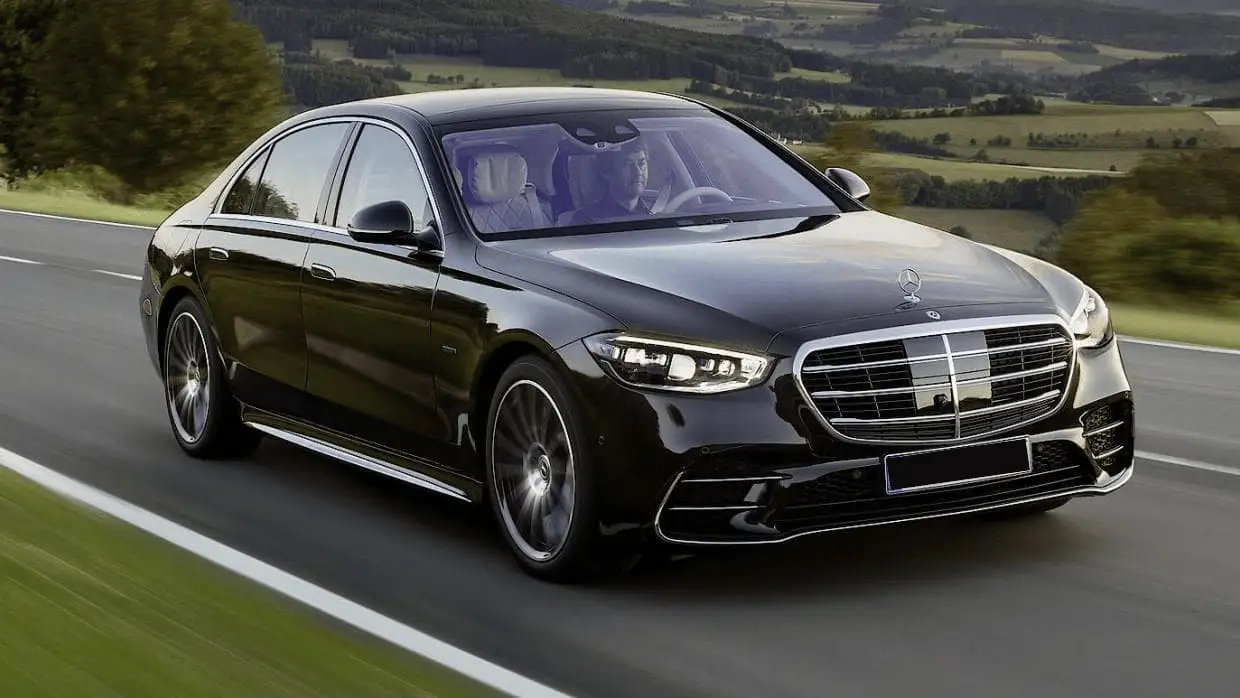
- Business Class — The right choice for business travel, client journeys, or anyone for whom the vehicle quality reflects a professional standard.
- Business Class Van — For small groups or passengers with significant luggage. Seven bags is a lot more than most cars accommodate comfortably.
- Business Touring Van — Groups of passengers traveling together between cities. Eighteen pieces of luggage. Professional presentation at scale.
For journeys over 2 hours, the difference between Economy and Business Class becomes quite noticeable. It’s worth considering what the destination requires — if you’re arriving at a meeting, arriving composed matters.
Cross-Border Transfers — What You Need to Know
Many travelers across the country need to reach destinations in Belgium or Germany. Private transfer handles this well, but a few things are worth understanding in advance:
Timing is longer — plan accordingly. A Brussels transfer from Amsterdam is roughly 200 km and takes 2.5–3 hours depending on border area traffic. Build in enough time for your arrival obligations.
Inform your provider of the destination country at booking. Cross-border journeys may have slightly different pricing structures. Fixed pricing still applies — it simply needs to be confirmed for the specific route.
Document requirements vary. Within the Schengen Area, crossing between the country, Belgium, and Germany involves no formal border control for EU citizens. Non-EU travelers should ensure their documentation is in order regardless of transport mode.
Insider Details Most Intercity Transfer Articles Skip
Departure time is more flexible than most people realize. You choose when you leave — not when the next service runs. For business travelers who need to be in Rotterdam by 09:00 from Amsterdam, the private transfer leaves at whatever time makes that arrival comfortable. No service timing to reverse-engineer.
Return legs can be arranged simultaneously. If you’re making a round trip — Amsterdam to The Hague for a meeting and back — both legs can be booked in the same transaction. Coordinating this in advance saves time and ensures the return vehicle is confirmed regardless of how the day’s schedule unfolds.
Traffic patterns vary significantly by route and time. The A2 between Amsterdam and Utrecht, the A4 toward The Hague, and the A16 into Rotterdam all have predictable congestion windows. A professional driver plans departure times with these in mind — not just the map distance.
Common Mistakes With Intercity Private Transfers
Not specifying the exact start and end address. “Amsterdam to Rotterdam” is a starting point for the booking, not the booking itself. Door-to-door requires precise addresses at both ends. Provide them at the time of booking.
Underestimating journey time for time-sensitive arrivals. Private transfer is faster than multiple public transport changes — but it’s not faster than traffic. For crucial arrivals (early flights, depositions, board meetings), build 20–30 minutes of buffer into your departure time.
Booking the wrong vehicle for the group. Four passengers with large suitcases will not comfortably fit in a vehicle rated for two bags. Check the luggage capacity of your chosen vehicle class before confirming.
Not arranging the return at the same time. It feels like a small thing until you’re in Rotterdam at 18:00 trying to book a ride back to Amsterdam during peak evening hours with limited availability.
Frequently Asked Questions – City-to-City Travel
What intercity routes are covered?
Private transfers cover all major Dutch cities and cross-border destinations including Belgium and Germany. Provide your specific origin and destination at booking for a confirmed fixed price.
Is the price truly fixed regardless of traffic?
Yes. The price is agreed at booking and doesn’t change based on journey duration or traffic conditions.
Can I make a stop en route?
Yes. Additional stops can be incorporated into an intercity booking. Mention them at booking so they’re factored into the route and pricing.
How far in advance should I book an intercity transfer?
For standard routes, 24–48 hours is usually sufficient. For early morning departures, cross-border journeys, or peak travel periods, book at least 72 hours ahead.
Are cross-border transfers available?
Yes. Regular intercity transfer routes extend to Belgium and Germany. Confirm your destination country at booking for accurate pricing and route planning.
What’s the most comfortable vehicle for a long journey?
For journeys over 90 minutes, Business Class or above is strongly recommended. The difference in comfort on longer routes is meaningful, particularly if you’re arriving at a professional or formal setting.
Travel Between Cities Like It’s Already Sorted
The best intercity journeys are the ones you don’t have to think about. Where you know the car is coming, the price is set, the vehicle is right, and the driver knows exactly where they’re going.
No platforms. No connections. No uncertainty.
Just the journey, managed professionally, from your door to theirs.
Compare with our airport transfers and corporate travel.